PCD, centre bore, offset and load rating explained in plain English — the four numbers that decide whether a wheel really fits.
Every DRAXLER project page includes a fitment guide. The tables look technical, but they come down to four numbers. Understand these and you can judge almost any wheel listing in seconds.
1. Bolt pattern (PCD)
Written as “5×130”, it means five bolts on a 130 mm circle. It must match your hub exactly — there is no tolerance. Adapters exist, but they add width and are not something we recommend on high-performance vehicles.
2. Centre bore
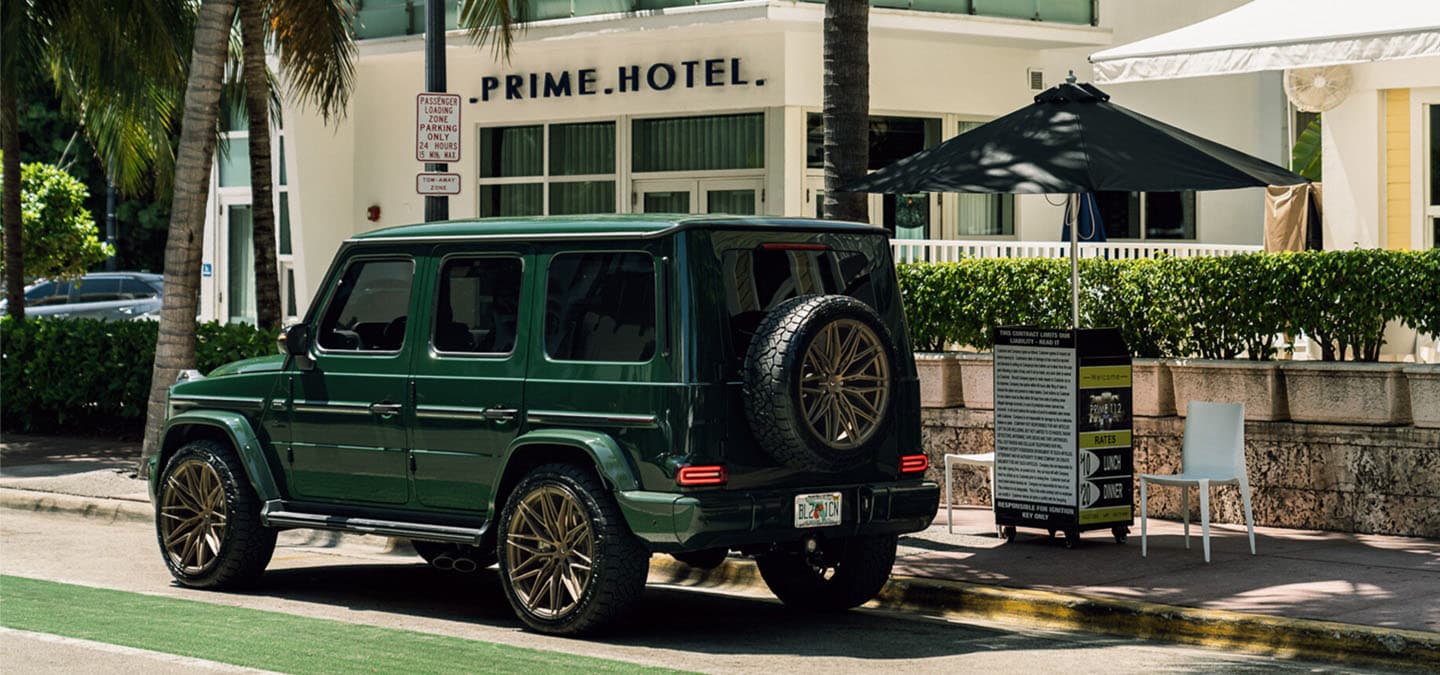
The diameter of the hole in the middle of the wheel. A hub-centric wheel matches the hub (84.1 mm on a G-Class), so the hub carries the load and the wheel runs perfectly true. Larger bores require centring rings.
3. Width and offset (ET)
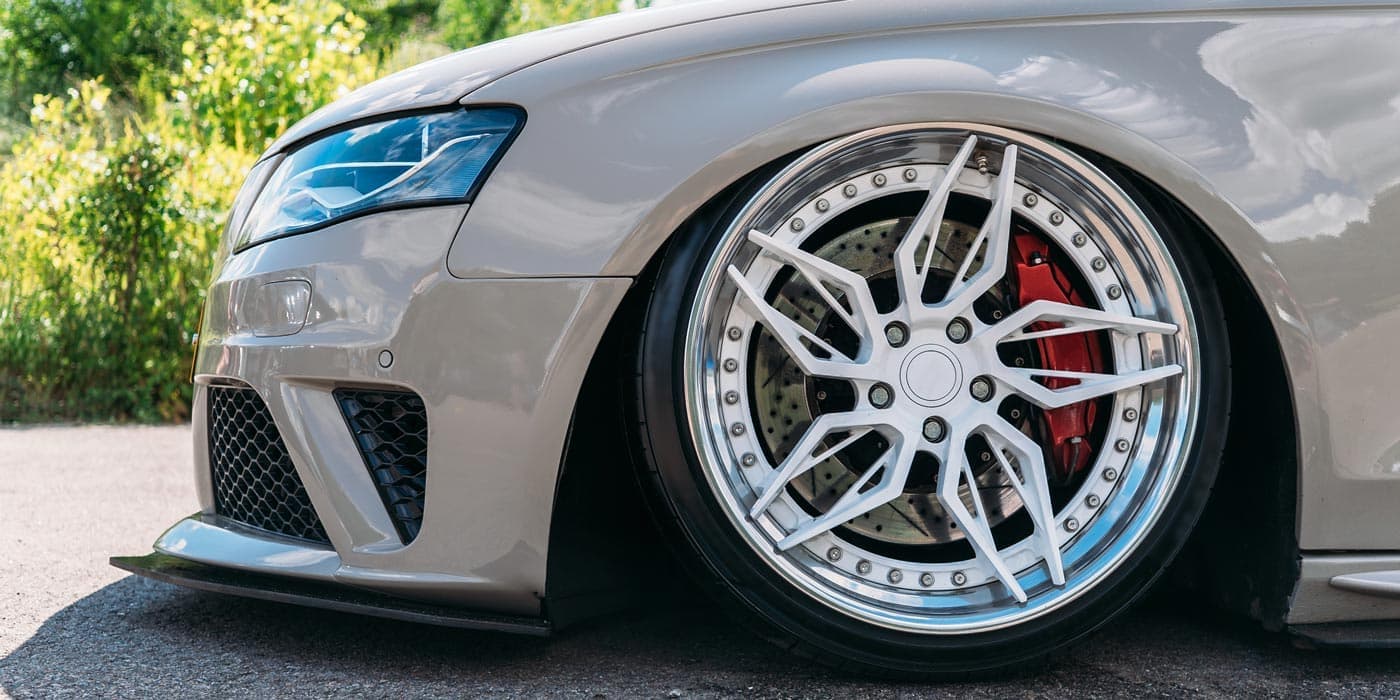
Offset is the distance between the wheel’s mounting face and its centreline. A lower ET pushes the wheel outwards; a higher ET pulls it in. Together with width, offset decides whether the tyre sits flush with the fender, rubs the arch or hits the suspension.
- −5 mm ET
- Wheel moves 5 mm outward
- +0.5″ width
- ≈ 6.35 mm more each side
- Flush target
- 0–5 mm inside the fender lip
- Diameter change
- Keep within ±3% rolling diameter
4. Load rating
Each wheel must support a share of the vehicle’s gross weight with a safety margin. We use gross vehicle weight × 1.3 ÷ 4 as the minimum. On heavy SUVs and EVs, this is often the number that rules out cheaper wheels.
- Start from the factory specification for your exact model year.
- Measure your own fender clearance — suspension height varies.
- Ask for a 3D fitment render before production.